






- Admissions
- Tour
- MapGift of Class of 2012
- Directory
- Hours of Operation
- Shuttles
- Athletics
- Blackboard
- Seats Lists
- College Scheduler
- MyFalconSSB for Students
- FacultySSBSSB for Faculty
- Library
- Emergency
- Falcons Care CenterConcernCenter
- Indoor Maps
- Technology Help Desk Chat
- Technology Systems Status
- News
- Video
- Calendar
- Catalog
- Alumni
- Give
- University Website
- Athletics Website
- Dining Website
- Bookstore Website
- Gear Shop Website
- About







Latest News
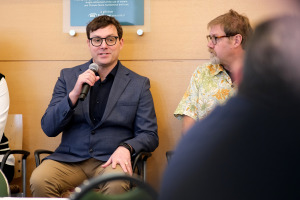
- Charles Stevenson named 2026 Robert V. and Jeanne S. Antonucci Award winnerCharles Stevenson, a resident of Rutland and a veteran of the Army Reserve, has been named the recipient of the 2026 Robert V. and Jeanne S. Antonucci Award, the highest honor bestowed upon a graduating senior at Fitchburg State University. President Dr. Donna Hodge announced the selection Monday, recognizing Stevenson for his academic excellence in mathematics and his transformative leadership within the campus community. The award, the university’s most prestigious honor for a graduating senior, is not merely a trophy for the highest GPA. It is a recognition for those who have navigated complex personal journeys to lead and inspire the community. For Stevenson, the path to the 2026 undergraduate commencement stage began far from the main quadrangle, winding through military service before finding a home at Fitchburg State. “Charles Stevenson represents the profound impact that dedicated service and intellectual rigor can have on a campus community,” said President Hodge. “It isn't just his mastery of mathematics or cybersecurity that sets him apart, but the way he has translated his experience as an Army veteran into a form of leadership that is both humble and transformative. Charles didn’t just join our community; he enriched it with his life experiences as an adult learner with a family.” Stevenson will receive an honorarium and the distinct honor of delivering the student address during the Undergraduate Commencement Ceremony on Saturday, May 16 on the main quadrangle. “It truly means the world to my family and me,” said Stevenson. “Being selected for the Robert V. and Jeanne S. Antonucci Student Leadership Award is such a profound honor. The Antonucci's embody community leadership and a commitment to public education, inseparable from their love and support for one another. My wife and I are inspired by their example to follow their lead in service to others.” Stevenson led a distinguished group of 2026 finalists that includes Madison Ambrogi, a community-focused scientist; Julia Arena, a clinical exercise advocate and student leader; Michael Burns, a two-term SGA president and multi-sport athlete; Matthew Gill, a student trustee and education researcher; Amanda DeLeon Guimaraes, an award-winning pre-law orator; Autumn Hughes, a creative arts therapist and musical leader; Geybrell Liriano, a dedicated ambassador for first-generation students; Evan Pritchard, a non-traditional scholar and campus maintainer; and Trenton Skaggs, a business honors president and ice hockey captain. The selection process for the Antonucci Award was rigorous. The "Top 10" finalists all underwent a formal interview process with the President’s Cabinet. After nearly two decades of managing IT infrastructure and security for a mission-driven organization, Stevenson returned to school to study the mathematics and computation underlying the systems he was responsible for. As a non-traditional student, Stevenson arrived at Fitchburg State in the spring of 2024. While many students are still finding their footing in their sophomore or junior years, Stevenson landed with a clear mission and a significant portfolio of transfer credits. As a dual major in Computer Science and Mathematics, with a specialized concentration in Cybersecurity, he didn't just join the Department of Health and Natural Sciences; he became one of its most visible advocates. Being a non-traditional student often carries the weight of balancing life experience with academic rigor. Stevenson, however, viewed his veteran status not as a barrier, but as a bridge. His academic work focuses on lattice-based cryptography, coding theory, and computational mathematics. He is currently looking toward research-based master's or PhD programs starting in the fall. “Balancing a double major in Mathematics and Computer Science, alongside my role as an IT Manager and a father of two has required discipline and many sacrifices, but it has also made this achievement that much more meaningful,” said Stevenson. “I will always be a Falcon, and Fitchburg State will forever be my alma mater.” The Antonucci Award recognizes students who pair academic excellence with transformative leadership and a profound impact on the campus community. Stevenson’s academic record is a masterclass in dedication, highlighted by his recognition as the Outstanding Mathematics Major for his peerless analytical skills and his induction into Pi Mu Epsilon, a national mathematics honor society reserved for those with an exceptional mastery of the field. Beyond the classroom, Stevenson’s commitment to his craft took him to the national stage in 2026, where he and colleague Rohanji “Anji” Novas represented Fitchburg State at the Joint Mathematics Meetings (JMM) and demonstrated their technical expertise in the USCLAP statistics modeling competition. His prowess in the classroom was so significant that it caught the attention of the university’s highest leadership. In April, Stevenson was invited to a Board of Trustees meeting to present his research and share his experiences at the JMM. Beyond the numbers, Stevenson’s impact was felt in his role as a Health and Natural Sciences Student Ambassador. Whether he was helping prospective families navigate the complexities of a STEM degree at Future Falcon Day or proctoring the 45th annual Elizabeth Haskins Mathematics Contest for local high schoolers, he remained a constant, grounding presence. Stevenson turned a complex academic path into a roadmap for others. By proctoring competitions for eight local high schools, he ensured that the next generation of mathematicians felt the same welcome he received when he first stepped onto campus. When Stevenson stands on the main quadrangle at commencement to address his peers, he will speak as a veteran, a father, a mathematician, and a cybersecurity expert. But most of all, he will speak as the embodiment of the Antonucci legacy—a student who took a complex journey and calculated a path to greatness for himself and his university. The Class of 2026 Undergraduate Commencement will begin at 2 p.m. on May 16, featuring a keynote address by Massachusetts Lt. Gov. Kim Driscoll. For more information about the commencement ceremony, please visit fitchburgstate.edu/commencement.
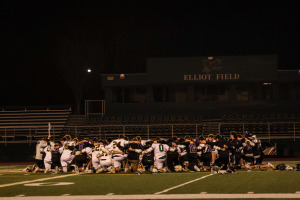
- University adds men’s lacrosse as 19th varsity sportFitchburg State University is proud to announce the expansion of its intercollegiate sports portfolio with the addition of varsity men’s lacrosse. This move brings the university’s total varsity offerings to 19 programs, further solidifying the Falcons' commitment to student-athlete growth and campus engagement. The Board of Trustees, chaired by Michael Fiorentino Jr., unanimously approved the creation of the team on Tuesday, April 28, paving the way to begin competitive play in the Massachusetts State Collegiate Athletic Conference (MASCAC). "The addition of men’s varsity lacrosse marks an exhilarating new chapter for Fitchburg State," said Fitchburg State President Donna Hodge. "This expansion is a direct investment in our students and the vibrant campus culture that defines the Falcon experience. By elevating our offerings to 19 varsity programs, we are not just growing our athletic department—we are creating more pathways for talented student-athletes to develop leadership skills, find their community, and pursue excellence both in the classroom and on the field. We are fully committed to supporting this program as it transitions to the NCAA level." Recruitment of a head coach for the varsity program will begin soon. “We are thrilled to bring varsity men’s lacrosse to Fitchburg State,” said Fitchburg State Executive Director of Athletics & Recreation Matt Burke. “Adding our 19th program isn't just about expanding our roster; it’s about fueling the energy of our campus and giving another group of elite student-athletes the chance to compete at the highest level. We’re ready to build a culture of excellence from the ground up and can’t wait to see the Falcons take the turf in the near future." The launch of a men’s varsity lacrosse program gives aspiring student-athletes a new opportunity to compete at the NCAA level and marks a significant and continued commitment to growing athletics on campus. Men’s collegiate lacrosse has solidified its status as a regional powerhouse, with an impressive high-school-to-NCAA advancement rate of nearly 15% fueling the sport's expansion. This growth is most prominent at the Division III level, where the high density of New England programs provides a robust competitive landscape and serves as a primary driver for student-athlete recruitment. Fitchburg State currently supports a club lacrosse team that competes in the Continental Lacrosse Conference. Fitchburg State added its 18th varsity sport with the recent addition of women’s ice hockey, which is set to hit the ice for the 2027–2028 season. Rebecca Brown was named the first head coach of the newly established women’s varsity ice hockey program.
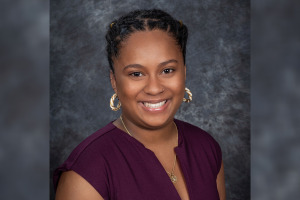
- University announces recipient of Graduate Student Leadership AwardJossara Dos Santos Dias of Boston, completing her Master of Education in Educational Leadership at Fitchburg State University, will receive the Graduate Student Leadership Award at the university’s graduate commencement ceremony on Saturday, May 16. Dias’ recognition includes the opportunity to address the graduates and guests at the ceremony, which will take place at 8 a.m. Saturday, May 16 on the university’s main quadrangle. Fitchburg State’s undergraduate commencement ceremony will follow at 2 p.m., where Massachusetts Lt. Gov. Kim Driscoll will give the keynote address. Fitchburg State celebrates its 130th commencement exercises this year. Dias has worked as STEM Education Senior Coordinator at Vertex Pharmaceuticals in Boston since 2022, working with high school students to inspire their interest in STEM fields and to learn more about biotech. “We are honored to recognize Jossara for her remarkable record of academic excellence, community service, and mentorship,” President Hodge said. “Her work has inspired the next generation of biotech professionals, while her bilingualism has allowed her to advocate for and empower students facing language barriers. Her dedication to fostering an inclusive, supportive environment for her fellow students demonstrates a holistic commitment to leadership that extends far beyond her own academic success, effectively preparing future leaders and strengthening her community. We are thrilled to welcome her to address our graduates and guests next month.” Additional details are posted at fitchburgstate.edu/commencement.
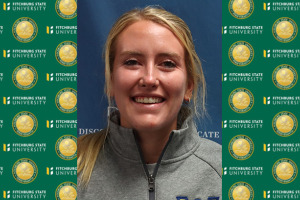
- Rebecca Brown named first women’s varsity ice hockey head coachFitchburg State University is proud to announce the appointment of Rebecca Brown as the first head coach of its newly established women’s varsity ice hockey program. Brown joins the Falcons from Wilkes University, bringing an elite pedigree of collegiate success and international professional experience to lead Fitchburg State into its inaugural season in 2027-2028. Wilkes finished 25-2-1 overall this winter, and fell to Nazareth University, 2-1 in overtime, in a NCAA Division 3 Championship quarterfinal. The appointment of Brown, of Steamboat Springs, Colo., follows the university’s landmark decision to add women’s ice hockey as its 18th varsity sport. Brown, a former standout at Utica University and Norwich University, most recently served as an assistant coach at Wilkes University. Her extensive ice hockey background includes a professional playing career in Sweden, Hungary and Germany, as well as a Frozen Four appearance as a student-athlete. “We are thrilled to welcome Rebecca Brown to the Falcon family,” said Fitchburg State University Executive Director of Athletics & Recreation Matt Burke. “Rebecca stood out in our national search as a leader who understands the blueprints of a winning program. Her experience as a captain and coach at the Division 3 level, and a professional athlete makes her the ideal person to build this program from the ground up and recruit student-athletes who will excel both on the ice and in the classroom.” Brown graduated from Utica University with a bachelor's degree in nursing in 2020, and a master’s degree in healthcare administration in 2022. As a forward/defenseman, the 6-foot Brown tallied 38 goals and 41 assists for 79 points in her career at Division 3 Utica. She owns the program's 2nd-most career blocked shots (56) and 2nd-best career power-play shot percentage (18.60%). Fitchburg State President Donna Hodge emphasized that Brown’s hiring is a pivotal moment in the university’s strategic growth. “Today is a monumental day as we move from the vision of women’s varsity hockey to the reality of its leadership,” said President Hodge. “Coach Brown embodies the dedication and passion we value at Fitchburg State. Her arrival signals our commitment to creating meaningful opportunities for female student-athletes and gaining momentum as a powerhouse for women’s athletics in the MASCAC.” Coach Brown will begin her duties immediately, focusing on a nationwide recruiting effort to build a roster for the 2027–2028 season. The team will share the Wallace Civic Center with the championship-winning men’s program, utilizing the same facilities and the state-of-the-art Landry Arena for strength and conditioning. “I am incredibly honored, humbled, and excited to take the lead as the first head coach in Fitchburg State history,” said Brown. “This opportunity means a great deal to me, not just professionally but personally, as we begin building something from the ground up.” The launch of the program comes at a time of explosive growth for the sport. According to the NCAA, participation in women’s ice hockey has surged nearly 40% over the last decade. In Massachusetts alone, the number of girls’ high school teams nearly doubled between 2013 and 2023. While the varsity program prepares for its 2027-2028 debut, the existing Fitchburg State women’s ice hockey club will continue to operate with an expanded schedule for the 2026-2027 season, serving as a bridge to the varsity era. Brown said that what stood out about Fitchburg State is the university’s strong support system and commitment to doing things the right way. “For prospective student-athletes, they can expect a culture of personal accountability, resilience, grit and excellence,” said Brown. “We’re looking for players who are not only talented on the ice but also committed to growing as students and teammates – individuals who want to be part of something historic and help establish the foundation of this program. “I look forward to recruiting driven, passionate players who are ready to make history as the inaugural Falcons,” said Brown. “This is a unique opportunity to leave a lasting legacy, and I’m excited to get to work building a program that the university, Division III hockey and community can be proud of.” Fitchburg State will compete in the Massachusetts State Collegiate Athletic Conference against Worcester State, Salem State, Framingham State, Rivier and Mass. College of Liberal Arts. The inaugural Fitchburg State University roster in the 2027–2028 season will feature incoming freshmen, current students and transfers.
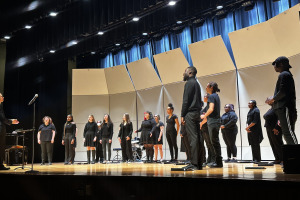
- University presents ‘Spring Sing’ on May 5The Fitchburg State Concert Choir and Chamber Choir, conducted by Fitchburg State University Associate Professor Jonathan Harvey of the Humanities Department, presents a “Spring Sing” at 7 p.m. on Tuesday, May 5 in Weston Auditorium, 353 North Street. The spring choir concert is free and open to the public. "The spring choir concert at Fitchburg State is always a joyful celebration of vocal music, featuring students, community members, and faculty joining together in song,” said Harvey. “It's also an emotional event – every year the concert ends with a performance of Sam Cooke's ‘A Change Is Gonna Come,’ which we dedicate to our graduating seniors, and former singers are invited to come onstage and sing it with us. "This year's ‘Spring Sing’ features music spanning multiple languages, continents, and centuries that the singers have been preparing all semester,” said Harvey. “It's going to be quite a show." Learn more about Fitchburg State's musical offerings at fitchburgstate.edu/music .
Latest News
- Charles Stevenson named 2026 Robert V. and Jeanne S. Antonucci Award winnerCharles Stevenson, a resident of Rutland and a veteran of the Army Reserve, has been named the recipient of the 2026 Robert V. and Jeanne S. Antonucci Award, the highest honor bestowed upon a graduating senior at Fitchburg State University. President Dr. Donna Hodge announced the selection Monday, recognizing Stevenson for his academic excellence in mathematics and his transformative leadership within the campus community. The award, the university’s most prestigious honor for a graduating senior, is not merely a trophy for the highest GPA. It is a recognition for those who have navigated complex personal journeys to lead and inspire the community. For Stevenson, the path to the 2026 undergraduate commencement stage began far from the main quadrangle, winding through military service before finding a home at Fitchburg State. “Charles Stevenson represents the profound impact that dedicated service and intellectual rigor can have on a campus community,” said President Hodge. “It isn't just his mastery of mathematics or cybersecurity that sets him apart, but the way he has translated his experience as an Army veteran into a form of leadership that is both humble and transformative. Charles didn’t just join our community; he enriched it with his life experiences as an adult learner with a family.” Stevenson will receive an honorarium and the distinct honor of delivering the student address during the Undergraduate Commencement Ceremony on Saturday, May 16 on the main quadrangle. “It truly means the world to my family and me,” said Stevenson. “Being selected for the Robert V. and Jeanne S. Antonucci Student Leadership Award is such a profound honor. The Antonucci's embody community leadership and a commitment to public education, inseparable from their love and support for one another. My wife and I are inspired by their example to follow their lead in service to others.” Stevenson led a distinguished group of 2026 finalists that includes Madison Ambrogi, a community-focused scientist; Julia Arena, a clinical exercise advocate and student leader; Michael Burns, a two-term SGA president and multi-sport athlete; Matthew Gill, a student trustee and education researcher; Amanda DeLeon Guimaraes, an award-winning pre-law orator; Autumn Hughes, a creative arts therapist and musical leader; Geybrell Liriano, a dedicated ambassador for first-generation students; Evan Pritchard, a non-traditional scholar and campus maintainer; and Trenton Skaggs, a business honors president and ice hockey captain. The selection process for the Antonucci Award was rigorous. The "Top 10" finalists all underwent a formal interview process with the President’s Cabinet. After nearly two decades of managing IT infrastructure and security for a mission-driven organization, Stevenson returned to school to study the mathematics and computation underlying the systems he was responsible for. As a non-traditional student, Stevenson arrived at Fitchburg State in the spring of 2024. While many students are still finding their footing in their sophomore or junior years, Stevenson landed with a clear mission and a significant portfolio of transfer credits. As a dual major in Computer Science and Mathematics, with a specialized concentration in Cybersecurity, he didn't just join the Department of Health and Natural Sciences; he became one of its most visible advocates. Being a non-traditional student often carries the weight of balancing life experience with academic rigor. Stevenson, however, viewed his veteran status not as a barrier, but as a bridge. His academic work focuses on lattice-based cryptography, coding theory, and computational mathematics. He is currently looking toward research-based master's or PhD programs starting in the fall. “Balancing a double major in Mathematics and Computer Science, alongside my role as an IT Manager and a father of two has required discipline and many sacrifices, but it has also made this achievement that much more meaningful,” said Stevenson. “I will always be a Falcon, and Fitchburg State will forever be my alma mater.” The Antonucci Award recognizes students who pair academic excellence with transformative leadership and a profound impact on the campus community. Stevenson’s academic record is a masterclass in dedication, highlighted by his recognition as the Outstanding Mathematics Major for his peerless analytical skills and his induction into Pi Mu Epsilon, a national mathematics honor society reserved for those with an exceptional mastery of the field. Beyond the classroom, Stevenson’s commitment to his craft took him to the national stage in 2026, where he and colleague Rohanji “Anji” Novas represented Fitchburg State at the Joint Mathematics Meetings (JMM) and demonstrated their technical expertise in the USCLAP statistics modeling competition. His prowess in the classroom was so significant that it caught the attention of the university’s highest leadership. In April, Stevenson was invited to a Board of Trustees meeting to present his research and share his experiences at the JMM. Beyond the numbers, Stevenson’s impact was felt in his role as a Health and Natural Sciences Student Ambassador. Whether he was helping prospective families navigate the complexities of a STEM degree at Future Falcon Day or proctoring the 45th annual Elizabeth Haskins Mathematics Contest for local high schoolers, he remained a constant, grounding presence. Stevenson turned a complex academic path into a roadmap for others. By proctoring competitions for eight local high schools, he ensured that the next generation of mathematicians felt the same welcome he received when he first stepped onto campus. When Stevenson stands on the main quadrangle at commencement to address his peers, he will speak as a veteran, a father, a mathematician, and a cybersecurity expert. But most of all, he will speak as the embodiment of the Antonucci legacy—a student who took a complex journey and calculated a path to greatness for himself and his university. The Class of 2026 Undergraduate Commencement will begin at 2 p.m. on May 16, featuring a keynote address by Massachusetts Lt. Gov. Kim Driscoll. For more information about the commencement ceremony, please visit fitchburgstate.edu/commencement.
- University adds men’s lacrosse as 19th varsity sportFitchburg State University is proud to announce the expansion of its intercollegiate sports portfolio with the addition of varsity men’s lacrosse. This move brings the university’s total varsity offerings to 19 programs, further solidifying the Falcons' commitment to student-athlete growth and campus engagement. The Board of Trustees, chaired by Michael Fiorentino Jr., unanimously approved the creation of the team on Tuesday, April 28, paving the way to begin competitive play in the Massachusetts State Collegiate Athletic Conference (MASCAC). "The addition of men’s varsity lacrosse marks an exhilarating new chapter for Fitchburg State," said Fitchburg State President Donna Hodge. "This expansion is a direct investment in our students and the vibrant campus culture that defines the Falcon experience. By elevating our offerings to 19 varsity programs, we are not just growing our athletic department—we are creating more pathways for talented student-athletes to develop leadership skills, find their community, and pursue excellence both in the classroom and on the field. We are fully committed to supporting this program as it transitions to the NCAA level." Recruitment of a head coach for the varsity program will begin soon. “We are thrilled to bring varsity men’s lacrosse to Fitchburg State,” said Fitchburg State Executive Director of Athletics & Recreation Matt Burke. “Adding our 19th program isn't just about expanding our roster; it’s about fueling the energy of our campus and giving another group of elite student-athletes the chance to compete at the highest level. We’re ready to build a culture of excellence from the ground up and can’t wait to see the Falcons take the turf in the near future." The launch of a men’s varsity lacrosse program gives aspiring student-athletes a new opportunity to compete at the NCAA level and marks a significant and continued commitment to growing athletics on campus. Men’s collegiate lacrosse has solidified its status as a regional powerhouse, with an impressive high-school-to-NCAA advancement rate of nearly 15% fueling the sport's expansion. This growth is most prominent at the Division III level, where the high density of New England programs provides a robust competitive landscape and serves as a primary driver for student-athlete recruitment. Fitchburg State currently supports a club lacrosse team that competes in the Continental Lacrosse Conference. Fitchburg State added its 18th varsity sport with the recent addition of women’s ice hockey, which is set to hit the ice for the 2027–2028 season. Rebecca Brown was named the first head coach of the newly established women’s varsity ice hockey program.
- University announces recipient of Graduate Student Leadership AwardJossara Dos Santos Dias of Boston, completing her Master of Education in Educational Leadership at Fitchburg State University, will receive the Graduate Student Leadership Award at the university’s graduate commencement ceremony on Saturday, May 16. Dias’ recognition includes the opportunity to address the graduates and guests at the ceremony, which will take place at 8 a.m. Saturday, May 16 on the university’s main quadrangle. Fitchburg State’s undergraduate commencement ceremony will follow at 2 p.m., where Massachusetts Lt. Gov. Kim Driscoll will give the keynote address. Fitchburg State celebrates its 130th commencement exercises this year. Dias has worked as STEM Education Senior Coordinator at Vertex Pharmaceuticals in Boston since 2022, working with high school students to inspire their interest in STEM fields and to learn more about biotech. “We are honored to recognize Jossara for her remarkable record of academic excellence, community service, and mentorship,” President Hodge said. “Her work has inspired the next generation of biotech professionals, while her bilingualism has allowed her to advocate for and empower students facing language barriers. Her dedication to fostering an inclusive, supportive environment for her fellow students demonstrates a holistic commitment to leadership that extends far beyond her own academic success, effectively preparing future leaders and strengthening her community. We are thrilled to welcome her to address our graduates and guests next month.” Additional details are posted at fitchburgstate.edu/commencement.
- Rebecca Brown named first women’s varsity ice hockey head coachFitchburg State University is proud to announce the appointment of Rebecca Brown as the first head coach of its newly established women’s varsity ice hockey program. Brown joins the Falcons from Wilkes University, bringing an elite pedigree of collegiate success and international professional experience to lead Fitchburg State into its inaugural season in 2027-2028. Wilkes finished 25-2-1 overall this winter, and fell to Nazareth University, 2-1 in overtime, in a NCAA Division 3 Championship quarterfinal. The appointment of Brown, of Steamboat Springs, Colo., follows the university’s landmark decision to add women’s ice hockey as its 18th varsity sport. Brown, a former standout at Utica University and Norwich University, most recently served as an assistant coach at Wilkes University. Her extensive ice hockey background includes a professional playing career in Sweden, Hungary and Germany, as well as a Frozen Four appearance as a student-athlete. “We are thrilled to welcome Rebecca Brown to the Falcon family,” said Fitchburg State University Executive Director of Athletics & Recreation Matt Burke. “Rebecca stood out in our national search as a leader who understands the blueprints of a winning program. Her experience as a captain and coach at the Division 3 level, and a professional athlete makes her the ideal person to build this program from the ground up and recruit student-athletes who will excel both on the ice and in the classroom.” Brown graduated from Utica University with a bachelor's degree in nursing in 2020, and a master’s degree in healthcare administration in 2022. As a forward/defenseman, the 6-foot Brown tallied 38 goals and 41 assists for 79 points in her career at Division 3 Utica. She owns the program's 2nd-most career blocked shots (56) and 2nd-best career power-play shot percentage (18.60%). Fitchburg State President Donna Hodge emphasized that Brown’s hiring is a pivotal moment in the university’s strategic growth. “Today is a monumental day as we move from the vision of women’s varsity hockey to the reality of its leadership,” said President Hodge. “Coach Brown embodies the dedication and passion we value at Fitchburg State. Her arrival signals our commitment to creating meaningful opportunities for female student-athletes and gaining momentum as a powerhouse for women’s athletics in the MASCAC.” Coach Brown will begin her duties immediately, focusing on a nationwide recruiting effort to build a roster for the 2027–2028 season. The team will share the Wallace Civic Center with the championship-winning men’s program, utilizing the same facilities and the state-of-the-art Landry Arena for strength and conditioning. “I am incredibly honored, humbled, and excited to take the lead as the first head coach in Fitchburg State history,” said Brown. “This opportunity means a great deal to me, not just professionally but personally, as we begin building something from the ground up.” The launch of the program comes at a time of explosive growth for the sport. According to the NCAA, participation in women’s ice hockey has surged nearly 40% over the last decade. In Massachusetts alone, the number of girls’ high school teams nearly doubled between 2013 and 2023. While the varsity program prepares for its 2027-2028 debut, the existing Fitchburg State women’s ice hockey club will continue to operate with an expanded schedule for the 2026-2027 season, serving as a bridge to the varsity era. Brown said that what stood out about Fitchburg State is the university’s strong support system and commitment to doing things the right way. “For prospective student-athletes, they can expect a culture of personal accountability, resilience, grit and excellence,” said Brown. “We’re looking for players who are not only talented on the ice but also committed to growing as students and teammates – individuals who want to be part of something historic and help establish the foundation of this program. “I look forward to recruiting driven, passionate players who are ready to make history as the inaugural Falcons,” said Brown. “This is a unique opportunity to leave a lasting legacy, and I’m excited to get to work building a program that the university, Division III hockey and community can be proud of.” Fitchburg State will compete in the Massachusetts State Collegiate Athletic Conference against Worcester State, Salem State, Framingham State, Rivier and Mass. College of Liberal Arts. The inaugural Fitchburg State University roster in the 2027–2028 season will feature incoming freshmen, current students and transfers.
- University presents ‘Spring Sing’ on May 5The Fitchburg State Concert Choir and Chamber Choir, conducted by Fitchburg State University Associate Professor Jonathan Harvey of the Humanities Department, presents a “Spring Sing” at 7 p.m. on Tuesday, May 5 in Weston Auditorium, 353 North Street. The spring choir concert is free and open to the public. "The spring choir concert at Fitchburg State is always a joyful celebration of vocal music, featuring students, community members, and faculty joining together in song,” said Harvey. “It's also an emotional event – every year the concert ends with a performance of Sam Cooke's ‘A Change Is Gonna Come,’ which we dedicate to our graduating seniors, and former singers are invited to come onstage and sing it with us. "This year's ‘Spring Sing’ features music spanning multiple languages, continents, and centuries that the singers have been preparing all semester,” said Harvey. “It's going to be quite a show." Learn more about Fitchburg State's musical offerings at fitchburgstate.edu/music .
Latest Athletics News
- No results found


