




- Admissions
- Tour
- MapGift of Class of 2012
- Hours of Operation
- Shuttles
- Athletics
- Athletics TicketsPurplepass
- Blackboard
- Seats Lists
- College Scheduler
- MyFalconSSB for Students
- FacultySSBSSB for Faculty
- Library
- Emergency
- Falcons Care CenterConcernCenter
- Technology Help Desk Chat
- Technology Systems Status
- Directory
- Indoor Maps
- News
- Video
- Calendar
- Catalog
- Alumni
- Give
- University Website
- Athletics Website
- Dining Website
- Bookstore Website
- Gear Shop Website
- About










Latest News
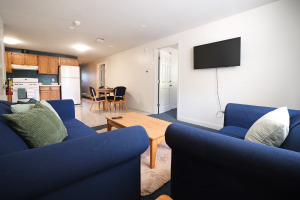
- University expands on-campus residential options with new family housingFitchburg State University has announced the launch of a new family housing option to support both undergraduate and graduate students with families as they pursue their degrees. The university has introduced a model apartment to showcase the layout and features available to prospective resident families, expanding its residential footprint and continuing its efforts to provide flexible, accessible, and inclusive housing solutions for a diverse student population. The family units will be located at 185 North St., which had previously served as apartments for traditional undergraduate and graduate students. The addition of family housing reflects Fitchburg State’s commitment to adapting to the evolving needs of its community. In recent years, the university has expanded its residential offerings along North Street, Highland Avenue, and within Simonds Hall to accommodate a growing number of non-traditional, international, and graduate students. By expanding options at the 185 North St. property, the university is creating a dedicated, supportive environment where students balancing academic goals with family responsibilities can thrive directly on campus. “Housing pressures are real across North Central Massachusetts, and they affect our students, their families, our workforce, and the communities we serve," said Fitchburg State President Donna Hodge. "This new option gives us an opportunity to respond to an immediate student need while also learning more about where demand exists and how the university can be a thoughtful partner in larger conversations about housing, access, and economic opportunity in our region. For Fitchburg State, this is about understanding what our students and community need and helping create the conditions for good solutions to emerge.” Designed to comfortably accommodate up to five family members – defined as spouses, significant others, or dependent children – each family unit is structured as a spacious, fully furnished five-bedroom apartment. The layout provides ample room for both personal privacy and shared family life. Each unit features two bedrooms equipped with twin XL beds, dressers, and study desks, alongside a primary bedroom fitted with a queen-size bed, dresser, and desk. The shared spaces within each unit are thoughtfully designed for daily convenience. The living room comes fully furnished with a sofa, coffee table, end table, and a wall-mounted 40-inch television. The kitchen is equipped with modern, full-size appliances, including a refrigerator and freezer, stovetop, oven, and dishwasher, as well as a four-person dining table. For added convenience, every unit includes an in-unit washer and dryer, eliminating the need to use shared laundry facilities. “Family housing allows us to think about the residential experience in a more inclusive way and recognize that 'living on campus' can look different for every student,” said Fitchburg State Director of Residence Life Reilly Schaefer. “We recognize that our students have lives and responsibilities beyond the classroom, and we want them to see living on campus as more than simply renting a space, but an opportunity to feel at home and be part of a supportive residential community. With fully furnished apartments, all-inclusive utilities, modern amenities, proximity to campus resources and year-round housing options, we've designed family housing to make day-to-day life a little easier so our students can focus on their education while still having the comforts and stability of a home.” To simplify budgeting and lower living barriers for student families, the cost of family housing is structured as an all-inclusive package. Housing fees cover all standard utilities, including water, electricity, gas, sewer, and heat, as well as complimentary high-speed Wi-Fi access. Additionally, the university provides full maintenance support, trash disposal, and regular snow removal throughout the winter months. A key advantage of the family housing program is its year-round availability. Unlike traditional undergraduate residence halls that close during campus breaks, family housing operates on a 12-month housing occupancy agreement. This structure allows resident families to remain continuously in their homes through winter, spring, and summer breaks without disruption. "Our goal in Student Affairs is to create an environment where every student has the resources and support they need to succeed, no matter their life stage," said Dean of Students and Chief Student Affairs Officer Tim St. John. “This is one example of how we are working to ensure a student experience that is accessible to all.” Students in good academic standing who remain enrolled in their degree programs will also have the opportunity to renew their housing agreements for subsequent years. By offering comprehensive family accommodations directly on campus, Fitchburg State aims to reduce commute times, relieve external housing stress, and integrate student families into the broader university community. Residents will enjoy immediate proximity to campus academic buildings, administrative offices, health services, and recreational facilities, ensuring that non-traditional and graduate student families have equal access to vital campus support structures. The program is open to both undergraduate and graduate students enrolled in degree-granting programs at Fitchburg State University. Prospective residents must meet standard eligibility requirements and complete the formal Family Housing Agreement process. Students interested in exploring this new housing option, reviewing eligibility details, or arranging a viewing of the model apartment are encouraged to reach out directly to the university's Residence Life office. Inquiries and application requests can be submitted via email to housing@fitchburgstate.edu or by visiting the Fitchburg State Residence Life website at www.fitchburgstate.edu/campus-life/residence-life.
- University recognized among the best colleges in Mass. by Research.comFitchburg State University has been recognized among the best business degrees programs in Massachusetts 2027 ranking by Research.com. The institution was also a winner of the Best Online Business Programs in Massachusetts Award. "We're proud to see Fitchburg State University recognized for the quality and value of our programs, particularly in areas like business and nursing that serve students at many different stages of their lives," said Fitchburg State University President Dr. Donna Hodge. "Our online programs extend the academic rigor, faculty expertise, and personal attention that define a Fitchburg State education to students who need greater flexibility in how and where they learn. That combination of quality, access, and affordability is central to our public mission and to the opportunities we work to create for our students." You can find the full profile of Fitchburg State here: https://research.com/best-colleges/fitchburg-state-university Fitchburg State University was also recognized in these rankings: 2027 Best Online Business Degree Programs Ranking in Massachusetts 2027 Best Online Master's in Nursing Degree Programs Ranking in the USA 2027 Best Online Master's in Nursing Degree Programs Ranking in Massachusetts 2027 Best Online Nursing Degree Programs Ranking in Massachusetts Research.com is a leading university ranking platform dedicated to helping students make informed decisions about their education. This recognition is part of Research.com's newly released best colleges ranking, which highlights America’s top colleges in terms of quality of education, popularity and affordability. The 2027 rankings by Research.com were compiled through an extensive analysis of data points from multiple sources, including Peterson, IPEDS, and College ScoreCard. These rankings consider various degree types and regions, focusing on key factors such as overall quality, affordability, popularity, and the time required to earn a degree. Fitchburg State University is a public university in Massachusetts known for combining strong academics with a supportive, student-centered environment. The university offers a wide range of undergraduate and graduate programs designed with career readiness in mind, emphasizing hands-on learning, internships, and close collaboration with faculty. With smaller class sizes, students benefit from personalized attention and meaningful mentorship, helping them succeed both academically and professionally.
- Ninth class of police recruits graduatesPride echoed through Weston Auditorium at Fitchburg State University on Wednesday, where the university celebrated its newest police academy graduates, all of whom are already headed to municipal police departments across Massachusetts. The 9th Recruit Officer Course (ROC) members proudly completed the groundbreaking police program that blends academic and tactical training, allowing graduates to complete both bachelor’s and master’s degrees, along with full certification to work in municipal police departments in just five years. The program was developed in collaboration with the Massachusetts Municipal Police Training Commission (MPTC). Reflecting on their journey through the 9th ROC, Class Leader Christian Marsden highlighted how a tight-knit class of just five recruits endured rigorous physical and mental testing by leaning on teamwork, humor, and intensive training to turn dynamic chaos into a strong foundation for their police careers. “To my classmates of the 9th, take a second to remind yourself of how far we have come,” said Marsden. “Through the last four years and in the academy, everything we have learned has shaped us to who we are today. Think back to staying up late studying, writing reports, gigs, making sure our uniforms are ironed and that we had all the gear for the next day. Quitting was never an option for the 9th. In the moments you thought it would never end, look at us here together on this stage. Continue being yourself and staying true to who you are. Serve with pride, integrity, discipline and be professional to your department, family and keep yourself healthy. Ninth, it is not always going to go the way you want, you will have difficult calls, don't hesitate to call me and hear my Boston accent.” Marsden said that graduation would not have been possible if not for the structure and guidance from the drill instructors, physical training staff, family and the Fitchburg State University Police. A special thank you went out to Academy Director Ola Wysocki. “And to Director Wysocki, you are the foundation and backbone of this Academy/Police Program,” said Marsden. “Your hard work, commitment and dedication to the 9th ROC is unlike anything else. You go above and beyond to make sure everything is run smoothly and when it goes awry, you are always the first one to fix it. Your passion for making sure that we are prepared when we go to our departments is much appreciated. Every day of the academy you were there to steer us in the right direction and supported us to achieve our goals. Thank you for going above and beyond and being the director that everybody wants.” Fitchburg State University President Donna Hodge also addressed the graduates and guests. Hodge recalled seeing the graduates cross the stage for their criminal justice degrees in May before watching them transition just two days later to the starkly different, demanding environment of "Day One" at the Academy, where they met every challenge with pride, poise, and readiness over the next 17 weeks. “The new officers on the stage before you have earned the honors being bestowed upon them today,” said Hodge. “They have demonstrated grit and character, and dedication to a calling bigger than themselves as individuals.” Hodge said she was proud of the university’s collective work and vision in supporting these officers and the classes before and after them, highlighting how dedicated faculty, librarians, and staff helped bridge academic inquiry with professional training in a groundbreaking model worth replicating. “Today, I am most proud of you, the members of the 9th ROC,” said Hodge. “Your discipline and perseverance have led you here, to this stage, where you are being cheered on by family, friends and loved ones, who have believed in you, and, I imagine, been inspired by you. The members of the 10th ROC are in the audience today, looking to follow in your remarkable footsteps. You have set the example, and in this moment I want you to imagine the possibilities that lie before you. Think of the examples you will set in your daily careers, in your personal lives. Imagine the lives your work and your actions will affect.” Hodge said the graduates had completed a rigorous academic curriculum while maintaining uncompromising standards for fitness and conduct. “Very soon, you will be sworn in as police officers, and I know the police chiefs in the room are ready for you to report for duty and begin the work you have all pursued for the last four years, and sometimes longer,” said Hodge. “To the departments who have hired these remarkable officers, I offer congratulations. Your departments will benefit from the addition of these outstanding young men, who have so confidently proven they are ready and willing to embrace the challenges and opportunities ahead.” For the majority of the 17 weeks, Wysocki referred to the 9th ROC as, “small but mighty.” Wysocki highlighted the 9th’s exceptional empathy and character. She recalled that after presenting an Officer Down Memorial report on Auburn Police Officer Ronald Tarentino Jr. at the end of their grueling first week, the recruits engaged in a deep, meaningful discussion about his life, adopting an attitude of deep gratitude rather than selfishness and self pity at the road ahead. Wysocki noted that this compassion carried through their training — such as when the class set aside their competitive drive during a charity 5K road race to slow their pace and support a struggling runner. “On behalf of the staff, I want to thank you 9th for being you,” said Wysocki. “For daily dedication to the process of becoming police officers, for being emotionally intelligent and turning everything into a learning opportunity. Thank you for not getting caught up in being small, but realizing that is where your might comes from. So as the next step in your career starts I ask that you humor me as I give some advice. “The next phase of your training begins, for most of you, as early as tomorrow,” said Wysocki. “Approach it as you have everything up until this point with bravery. At some point in your career you will get tired, whether it's one specific call or too many, do not lose faith in humanity or yourselves. One small step is movement, be persistent enough to ask for help so you can move forward. You will make mistakes, that’s part of life. Humility allows you to acknowledge you need to change, improve and grow. Trust the process, like you have these past four years and you will do great things.” State Rep. and Double Falcon Michael Kushmerek, who studied criminal justice during his undergraduate years at Fitchburg State, stressed to the graduates to remember the importance of compassion as they enter their careers. MPTC Director of Training Andrea Nardone was also on hand to congratulate the graduates. The members of the 9th ROC and the departments that have hired them include: Class Leader Christian Marsden of Tewksbury (Somerville Police Department), First Squad Leader Collin Dudek of Fitchburg (Framingham Police Department), Jack Rouhana of Walpole (Walpole Police Department), Kole Broderick of Gill (Athol Police Department), and Jonah Sallese of Maynard (Sudbury Police Department). Class Awards: Academic Achievement Award – Kole Broderick Physical Training Achievement Award – Kole Broderick Emergency Vehicle Operations Course (EVOC) Award – Collin Dudek Firearms Training (“Top Gun”) Award – Collin Dudek 100 Percent Award – Christian Marsden Click to read in-depth magazine profiles on Dudek and Rouhana. To learn more about the police program, please visit https://www.fitchburgstate.edu/academics/programs/police-program-41-con…
- University celebrates Hispanic Heritage Month with cultural, educational eventsFitchburg State University announced its schedule of programming for Hispanic Heritage Month, running Sept. 15 through Oct. 21. Aligned with the national theme, “ Unidos, Somos Más. Together, We Are More,” the university’s celebrations highlight the contributions of Hispanic and Latino communities in education, leadership, advocacy and the arts. The monthlong lineup honors the 20 recognized countries and territories, including Spain, Mexico, Colombia, Puerto Rico and the Dominican Republic. All events are supported by the Newman Center Trust Fund and coordinated by the Center for Diversity and Inclusiveness alongside student organizations. “This programming reflects our commitment to fostering a campus environment where every student feels valued and connected,” said Fitchburg State Director of Student Belonging Krysta Lopez-Acevedo. “By engaging in these shared experiences and dialogue, our university community comes together to honor these distinct cultural traditions while building a stronger, more inclusive Fitchburg State.” Schedule of Events: Flag Raising Kickoff: Tuesday, Sept. 15, 2:30–3:30 p.m. at Hammond Plaza — Official kickoff ceremony raising the Hispanic Heritage Month flag. Culture Clash (Meet the E-Boards: ASA, BSU, CASA, LASO): Saturday, Sept. 19, 2:30–6:30 p.m. at Main Quad — Outdoor cookout featuring cultural food, music and student leaders. Piña Colada Making Class : Tuesday, Sept. 22, 3:30–5:30 p.m. at Hammond Main Lounge — Hands-on mocktail workshop on the history and mixology of the island beverage. Bomba Night with LASO: Wednesday, Sept. 23, 6–8 p.m. at Hammond Main Lounge — Interactive Afro-Puerto Rican cultural workshop featuring live drumming, dance and food. CASA Splash & Serve Car Wash: Saturday, Sept. 26, 9 a.m.–noon at 99 Restaurants, 275 Summer St. — Caribbean Student Association fundraiser ($5 minimum donation). Voices of Hispanic Professionals (Faculty & Staff Panel): Wednesday, Sept. 30, 4–6 p.m. at Hammond Main Lounge — Panel discussion on career journeys and leadership. Disney Pixar “Coco” Movie Screenings: Wednesday, Oct. 7, 4:30 p.m. and 7 p.m. at Ellis White Lecture Hall — Film screenings celebrating family traditions and Día de los Muertos. Noche Latina: Tuesday, Oct. 13, 5:30–9 p.m. at Hammond Main Lounge — Evening of authentic Latin American cuisine, community and connection. Let's Taco Bout Your Career: Thursday, Oct. 15, 11 a.m.–1:30 p.m. at Hammond G-Lobby — Networking event featuring career conversations and themed treats. Sofrito Workshop: Thursday, Oct. 15, 3:30–5:30 p.m. at Hammond Main Lounge — Culinary class teaching the preparation and significance of homemade sofrito. Voices of Hispanic Professionals (Alumni & Community Members Panel): Wednesday, Oct. 21, 4–6 p.m. at Hammond Main Lounge — Panel featuring university alumni and community members sharing professional insights. Fitchburg State is committed to providing a comfortable, inclusive, and respectful environment for all members of our community. If you have access needs or would like to request accommodations to fully participate in these events, please contact cdioffice@fitchburgstate.edu or at 978.665.3701 two weeks in advance of the event. The Hispanic Heritage Month events are made possible by the support of the Newman Center Trust Fund. Every Fitchburg State University event welcomes all members of the university community.
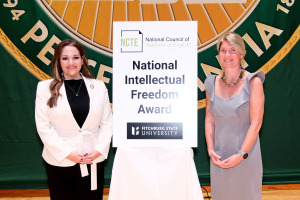
- University to receive National Intellectual Freedom Award from NCTEFitchburg State University has been selected as the recipient of the 2026 NCTE National Intellectual Freedom Award, presented by the National Council of Teachers of English (NCTE) and SLATE (Support for the Learning and Teaching of English). Established in 1997, the annual award honors individuals, groups, or institutions that merit recognition for advancing the cause of intellectual freedom and standing against educational censorship. Fitchburg State was selected by a subcommittee of the NCTE Committee Against Censorship for its comprehensive, campus-wide commitment to defending free expression and maintaining equitable access to diverse literature and research. “Intellectual freedom is not just an abstract principle at Fitchburg State, it is a core value woven into our classrooms, our archives, and our engagement with the community,” said Fitchburg State University President Donna Hodge. “At a time when access to diverse stories and vital information faces unprecedented challenges, we are deeply honored to receive this recognition from NCTE. It reflects the courageous work of our faculty, librarians, students, and community partners who stand up every day for open inquiry and the freedom to read.” The university will be honored during the NCTE Annual Convention in Philadelphia from Nov. 19-22. "At a moment when so many institutions are restricting access to diverse stories and perspectives, I am so proud to stand with and represent Fitchburg State University,” said Professor of English Studies Katharine Covino, the faculty member who nominated Fitchburg State. “Our long history as a campus that values and promotes intellectual freedom means that today we are able to continue an empowering tradition of liberatory education, equitable access, and justice-oriented coursework." The university’s selection highlights a broad range of sustained anti-censorship initiatives across faculty, staff, students, and the local community: The university’s Amelia V. Gallucci-Cirio Library leads annual Banned Books Week activities, hosts inclusive community programming like Drag Queen Story Time events, and convened a panel of local public librarians to discuss hyper-local censorship pressures. The library also launched dedicated guides for government data preservation to safeguard open research access. Through the Adult Learning in the Fitchburg Area (ALFA) program, older adults collaborate with undergraduate students to examine challenged literature. Participants analyze historical patterns of censorship using primary sources from the university’s archives, including the papers of local author Robert Cormier, whose novel, The Chocolate War remains a touchstone in discussions on free expression. In spring 2025, the campus launched "Scholars on Tap," a student-led Teach-In addressing censorship, democracy, and information access. Additionally, Fitchburg State faculty have authored 10 open-access, equity-focused textbooks through the grant-funded ROTEL initiative, helping break down financial barriers to learning materials. Pre-service teachers in the English Studies and education departments write and publish book rationales directly for the NCTE anti-censorship database. Communication Law & Ethics students regularly host public forums on censorship, canceled media, and First Amendment rights in partnership with the Society of Philosophers in America. Grounded in a landmark institutional legacy — Antonelli v. Hammond (1970), a U.S. District Court case that protected student press from prior restraint — Fitchburg State students continue to lead on free expression issues. Recently, an undergraduate honors student presented research on middle and secondary school English classroom censorship alongside faculty at the national NCTE conference. By embedding anti-censorship principles across curriculum design, archival preservation, and public forums, Fitchburg State University continues to foster an environment where open inquiry and diverse perspectives are actively defended. About Fitchburg State University Fitchburg State University is a public institution dedicated to integrating high-quality professional programs with strong liberal arts and sciences studies. Founded in 1894, the university now has more than 30 undergraduate programs and 22 master's degree programs, and 6,000 full and part-time students.


Latest News
- University expands on-campus residential options with new family housingFitchburg State University has announced the launch of a new family housing option to support both undergraduate and graduate students with families as they pursue their degrees. The university has introduced a model apartment to showcase the layout and features available to prospective resident families, expanding its residential footprint and continuing its efforts to provide flexible, accessible, and inclusive housing solutions for a diverse student population. The family units will be located at 185 North St., which had previously served as apartments for traditional undergraduate and graduate students. The addition of family housing reflects Fitchburg State’s commitment to adapting to the evolving needs of its community. In recent years, the university has expanded its residential offerings along North Street, Highland Avenue, and within Simonds Hall to accommodate a growing number of non-traditional, international, and graduate students. By expanding options at the 185 North St. property, the university is creating a dedicated, supportive environment where students balancing academic goals with family responsibilities can thrive directly on campus. “Housing pressures are real across North Central Massachusetts, and they affect our students, their families, our workforce, and the communities we serve," said Fitchburg State President Donna Hodge. "This new option gives us an opportunity to respond to an immediate student need while also learning more about where demand exists and how the university can be a thoughtful partner in larger conversations about housing, access, and economic opportunity in our region. For Fitchburg State, this is about understanding what our students and community need and helping create the conditions for good solutions to emerge.” Designed to comfortably accommodate up to five family members – defined as spouses, significant others, or dependent children – each family unit is structured as a spacious, fully furnished five-bedroom apartment. The layout provides ample room for both personal privacy and shared family life. Each unit features two bedrooms equipped with twin XL beds, dressers, and study desks, alongside a primary bedroom fitted with a queen-size bed, dresser, and desk. The shared spaces within each unit are thoughtfully designed for daily convenience. The living room comes fully furnished with a sofa, coffee table, end table, and a wall-mounted 40-inch television. The kitchen is equipped with modern, full-size appliances, including a refrigerator and freezer, stovetop, oven, and dishwasher, as well as a four-person dining table. For added convenience, every unit includes an in-unit washer and dryer, eliminating the need to use shared laundry facilities. “Family housing allows us to think about the residential experience in a more inclusive way and recognize that 'living on campus' can look different for every student,” said Fitchburg State Director of Residence Life Reilly Schaefer. “We recognize that our students have lives and responsibilities beyond the classroom, and we want them to see living on campus as more than simply renting a space, but an opportunity to feel at home and be part of a supportive residential community. With fully furnished apartments, all-inclusive utilities, modern amenities, proximity to campus resources and year-round housing options, we've designed family housing to make day-to-day life a little easier so our students can focus on their education while still having the comforts and stability of a home.” To simplify budgeting and lower living barriers for student families, the cost of family housing is structured as an all-inclusive package. Housing fees cover all standard utilities, including water, electricity, gas, sewer, and heat, as well as complimentary high-speed Wi-Fi access. Additionally, the university provides full maintenance support, trash disposal, and regular snow removal throughout the winter months. A key advantage of the family housing program is its year-round availability. Unlike traditional undergraduate residence halls that close during campus breaks, family housing operates on a 12-month housing occupancy agreement. This structure allows resident families to remain continuously in their homes through winter, spring, and summer breaks without disruption. "Our goal in Student Affairs is to create an environment where every student has the resources and support they need to succeed, no matter their life stage," said Dean of Students and Chief Student Affairs Officer Tim St. John. “This is one example of how we are working to ensure a student experience that is accessible to all.” Students in good academic standing who remain enrolled in their degree programs will also have the opportunity to renew their housing agreements for subsequent years. By offering comprehensive family accommodations directly on campus, Fitchburg State aims to reduce commute times, relieve external housing stress, and integrate student families into the broader university community. Residents will enjoy immediate proximity to campus academic buildings, administrative offices, health services, and recreational facilities, ensuring that non-traditional and graduate student families have equal access to vital campus support structures. The program is open to both undergraduate and graduate students enrolled in degree-granting programs at Fitchburg State University. Prospective residents must meet standard eligibility requirements and complete the formal Family Housing Agreement process. Students interested in exploring this new housing option, reviewing eligibility details, or arranging a viewing of the model apartment are encouraged to reach out directly to the university's Residence Life office. Inquiries and application requests can be submitted via email to housing@fitchburgstate.edu or by visiting the Fitchburg State Residence Life website at www.fitchburgstate.edu/campus-life/residence-life.
- University recognized among the best colleges in Mass. by Research.comFitchburg State University has been recognized among the best business degrees programs in Massachusetts 2027 ranking by Research.com. The institution was also a winner of the Best Online Business Programs in Massachusetts Award. "We're proud to see Fitchburg State University recognized for the quality and value of our programs, particularly in areas like business and nursing that serve students at many different stages of their lives," said Fitchburg State University President Dr. Donna Hodge. "Our online programs extend the academic rigor, faculty expertise, and personal attention that define a Fitchburg State education to students who need greater flexibility in how and where they learn. That combination of quality, access, and affordability is central to our public mission and to the opportunities we work to create for our students." You can find the full profile of Fitchburg State here: https://research.com/best-colleges/fitchburg-state-university Fitchburg State University was also recognized in these rankings: 2027 Best Online Business Degree Programs Ranking in Massachusetts 2027 Best Online Master's in Nursing Degree Programs Ranking in the USA 2027 Best Online Master's in Nursing Degree Programs Ranking in Massachusetts 2027 Best Online Nursing Degree Programs Ranking in Massachusetts Research.com is a leading university ranking platform dedicated to helping students make informed decisions about their education. This recognition is part of Research.com's newly released best colleges ranking, which highlights America’s top colleges in terms of quality of education, popularity and affordability. The 2027 rankings by Research.com were compiled through an extensive analysis of data points from multiple sources, including Peterson, IPEDS, and College ScoreCard. These rankings consider various degree types and regions, focusing on key factors such as overall quality, affordability, popularity, and the time required to earn a degree. Fitchburg State University is a public university in Massachusetts known for combining strong academics with a supportive, student-centered environment. The university offers a wide range of undergraduate and graduate programs designed with career readiness in mind, emphasizing hands-on learning, internships, and close collaboration with faculty. With smaller class sizes, students benefit from personalized attention and meaningful mentorship, helping them succeed both academically and professionally.
- Ninth class of police recruits graduatesPride echoed through Weston Auditorium at Fitchburg State University on Wednesday, where the university celebrated its newest police academy graduates, all of whom are already headed to municipal police departments across Massachusetts. The 9th Recruit Officer Course (ROC) members proudly completed the groundbreaking police program that blends academic and tactical training, allowing graduates to complete both bachelor’s and master’s degrees, along with full certification to work in municipal police departments in just five years. The program was developed in collaboration with the Massachusetts Municipal Police Training Commission (MPTC). Reflecting on their journey through the 9th ROC, Class Leader Christian Marsden highlighted how a tight-knit class of just five recruits endured rigorous physical and mental testing by leaning on teamwork, humor, and intensive training to turn dynamic chaos into a strong foundation for their police careers. “To my classmates of the 9th, take a second to remind yourself of how far we have come,” said Marsden. “Through the last four years and in the academy, everything we have learned has shaped us to who we are today. Think back to staying up late studying, writing reports, gigs, making sure our uniforms are ironed and that we had all the gear for the next day. Quitting was never an option for the 9th. In the moments you thought it would never end, look at us here together on this stage. Continue being yourself and staying true to who you are. Serve with pride, integrity, discipline and be professional to your department, family and keep yourself healthy. Ninth, it is not always going to go the way you want, you will have difficult calls, don't hesitate to call me and hear my Boston accent.” Marsden said that graduation would not have been possible if not for the structure and guidance from the drill instructors, physical training staff, family and the Fitchburg State University Police. A special thank you went out to Academy Director Ola Wysocki. “And to Director Wysocki, you are the foundation and backbone of this Academy/Police Program,” said Marsden. “Your hard work, commitment and dedication to the 9th ROC is unlike anything else. You go above and beyond to make sure everything is run smoothly and when it goes awry, you are always the first one to fix it. Your passion for making sure that we are prepared when we go to our departments is much appreciated. Every day of the academy you were there to steer us in the right direction and supported us to achieve our goals. Thank you for going above and beyond and being the director that everybody wants.” Fitchburg State University President Donna Hodge also addressed the graduates and guests. Hodge recalled seeing the graduates cross the stage for their criminal justice degrees in May before watching them transition just two days later to the starkly different, demanding environment of "Day One" at the Academy, where they met every challenge with pride, poise, and readiness over the next 17 weeks. “The new officers on the stage before you have earned the honors being bestowed upon them today,” said Hodge. “They have demonstrated grit and character, and dedication to a calling bigger than themselves as individuals.” Hodge said she was proud of the university’s collective work and vision in supporting these officers and the classes before and after them, highlighting how dedicated faculty, librarians, and staff helped bridge academic inquiry with professional training in a groundbreaking model worth replicating. “Today, I am most proud of you, the members of the 9th ROC,” said Hodge. “Your discipline and perseverance have led you here, to this stage, where you are being cheered on by family, friends and loved ones, who have believed in you, and, I imagine, been inspired by you. The members of the 10th ROC are in the audience today, looking to follow in your remarkable footsteps. You have set the example, and in this moment I want you to imagine the possibilities that lie before you. Think of the examples you will set in your daily careers, in your personal lives. Imagine the lives your work and your actions will affect.” Hodge said the graduates had completed a rigorous academic curriculum while maintaining uncompromising standards for fitness and conduct. “Very soon, you will be sworn in as police officers, and I know the police chiefs in the room are ready for you to report for duty and begin the work you have all pursued for the last four years, and sometimes longer,” said Hodge. “To the departments who have hired these remarkable officers, I offer congratulations. Your departments will benefit from the addition of these outstanding young men, who have so confidently proven they are ready and willing to embrace the challenges and opportunities ahead.” For the majority of the 17 weeks, Wysocki referred to the 9th ROC as, “small but mighty.” Wysocki highlighted the 9th’s exceptional empathy and character. She recalled that after presenting an Officer Down Memorial report on Auburn Police Officer Ronald Tarentino Jr. at the end of their grueling first week, the recruits engaged in a deep, meaningful discussion about his life, adopting an attitude of deep gratitude rather than selfishness and self pity at the road ahead. Wysocki noted that this compassion carried through their training — such as when the class set aside their competitive drive during a charity 5K road race to slow their pace and support a struggling runner. “On behalf of the staff, I want to thank you 9th for being you,” said Wysocki. “For daily dedication to the process of becoming police officers, for being emotionally intelligent and turning everything into a learning opportunity. Thank you for not getting caught up in being small, but realizing that is where your might comes from. So as the next step in your career starts I ask that you humor me as I give some advice. “The next phase of your training begins, for most of you, as early as tomorrow,” said Wysocki. “Approach it as you have everything up until this point with bravery. At some point in your career you will get tired, whether it's one specific call or too many, do not lose faith in humanity or yourselves. One small step is movement, be persistent enough to ask for help so you can move forward. You will make mistakes, that’s part of life. Humility allows you to acknowledge you need to change, improve and grow. Trust the process, like you have these past four years and you will do great things.” State Rep. and Double Falcon Michael Kushmerek, who studied criminal justice during his undergraduate years at Fitchburg State, stressed to the graduates to remember the importance of compassion as they enter their careers. MPTC Director of Training Andrea Nardone was also on hand to congratulate the graduates. The members of the 9th ROC and the departments that have hired them include: Class Leader Christian Marsden of Tewksbury (Somerville Police Department), First Squad Leader Collin Dudek of Fitchburg (Framingham Police Department), Jack Rouhana of Walpole (Walpole Police Department), Kole Broderick of Gill (Athol Police Department), and Jonah Sallese of Maynard (Sudbury Police Department). Class Awards: Academic Achievement Award – Kole Broderick Physical Training Achievement Award – Kole Broderick Emergency Vehicle Operations Course (EVOC) Award – Collin Dudek Firearms Training (“Top Gun”) Award – Collin Dudek 100 Percent Award – Christian Marsden Click to read in-depth magazine profiles on Dudek and Rouhana. To learn more about the police program, please visit https://www.fitchburgstate.edu/academics/programs/police-program-41-con…
- University celebrates Hispanic Heritage Month with cultural, educational eventsFitchburg State University announced its schedule of programming for Hispanic Heritage Month, running Sept. 15 through Oct. 21. Aligned with the national theme, “ Unidos, Somos Más. Together, We Are More,” the university’s celebrations highlight the contributions of Hispanic and Latino communities in education, leadership, advocacy and the arts. The monthlong lineup honors the 20 recognized countries and territories, including Spain, Mexico, Colombia, Puerto Rico and the Dominican Republic. All events are supported by the Newman Center Trust Fund and coordinated by the Center for Diversity and Inclusiveness alongside student organizations. “This programming reflects our commitment to fostering a campus environment where every student feels valued and connected,” said Fitchburg State Director of Student Belonging Krysta Lopez-Acevedo. “By engaging in these shared experiences and dialogue, our university community comes together to honor these distinct cultural traditions while building a stronger, more inclusive Fitchburg State.” Schedule of Events: Flag Raising Kickoff: Tuesday, Sept. 15, 2:30–3:30 p.m. at Hammond Plaza — Official kickoff ceremony raising the Hispanic Heritage Month flag. Culture Clash (Meet the E-Boards: ASA, BSU, CASA, LASO): Saturday, Sept. 19, 2:30–6:30 p.m. at Main Quad — Outdoor cookout featuring cultural food, music and student leaders. Piña Colada Making Class : Tuesday, Sept. 22, 3:30–5:30 p.m. at Hammond Main Lounge — Hands-on mocktail workshop on the history and mixology of the island beverage. Bomba Night with LASO: Wednesday, Sept. 23, 6–8 p.m. at Hammond Main Lounge — Interactive Afro-Puerto Rican cultural workshop featuring live drumming, dance and food. CASA Splash & Serve Car Wash: Saturday, Sept. 26, 9 a.m.–noon at 99 Restaurants, 275 Summer St. — Caribbean Student Association fundraiser ($5 minimum donation). Voices of Hispanic Professionals (Faculty & Staff Panel): Wednesday, Sept. 30, 4–6 p.m. at Hammond Main Lounge — Panel discussion on career journeys and leadership. Disney Pixar “Coco” Movie Screenings: Wednesday, Oct. 7, 4:30 p.m. and 7 p.m. at Ellis White Lecture Hall — Film screenings celebrating family traditions and Día de los Muertos. Noche Latina: Tuesday, Oct. 13, 5:30–9 p.m. at Hammond Main Lounge — Evening of authentic Latin American cuisine, community and connection. Let's Taco Bout Your Career: Thursday, Oct. 15, 11 a.m.–1:30 p.m. at Hammond G-Lobby — Networking event featuring career conversations and themed treats. Sofrito Workshop: Thursday, Oct. 15, 3:30–5:30 p.m. at Hammond Main Lounge — Culinary class teaching the preparation and significance of homemade sofrito. Voices of Hispanic Professionals (Alumni & Community Members Panel): Wednesday, Oct. 21, 4–6 p.m. at Hammond Main Lounge — Panel featuring university alumni and community members sharing professional insights. Fitchburg State is committed to providing a comfortable, inclusive, and respectful environment for all members of our community. If you have access needs or would like to request accommodations to fully participate in these events, please contact cdioffice@fitchburgstate.edu or at 978.665.3701 two weeks in advance of the event. The Hispanic Heritage Month events are made possible by the support of the Newman Center Trust Fund. Every Fitchburg State University event welcomes all members of the university community.
- University to receive National Intellectual Freedom Award from NCTEFitchburg State University has been selected as the recipient of the 2026 NCTE National Intellectual Freedom Award, presented by the National Council of Teachers of English (NCTE) and SLATE (Support for the Learning and Teaching of English). Established in 1997, the annual award honors individuals, groups, or institutions that merit recognition for advancing the cause of intellectual freedom and standing against educational censorship. Fitchburg State was selected by a subcommittee of the NCTE Committee Against Censorship for its comprehensive, campus-wide commitment to defending free expression and maintaining equitable access to diverse literature and research. “Intellectual freedom is not just an abstract principle at Fitchburg State, it is a core value woven into our classrooms, our archives, and our engagement with the community,” said Fitchburg State University President Donna Hodge. “At a time when access to diverse stories and vital information faces unprecedented challenges, we are deeply honored to receive this recognition from NCTE. It reflects the courageous work of our faculty, librarians, students, and community partners who stand up every day for open inquiry and the freedom to read.” The university will be honored during the NCTE Annual Convention in Philadelphia from Nov. 19-22. "At a moment when so many institutions are restricting access to diverse stories and perspectives, I am so proud to stand with and represent Fitchburg State University,” said Professor of English Studies Katharine Covino, the faculty member who nominated Fitchburg State. “Our long history as a campus that values and promotes intellectual freedom means that today we are able to continue an empowering tradition of liberatory education, equitable access, and justice-oriented coursework." The university’s selection highlights a broad range of sustained anti-censorship initiatives across faculty, staff, students, and the local community: The university’s Amelia V. Gallucci-Cirio Library leads annual Banned Books Week activities, hosts inclusive community programming like Drag Queen Story Time events, and convened a panel of local public librarians to discuss hyper-local censorship pressures. The library also launched dedicated guides for government data preservation to safeguard open research access. Through the Adult Learning in the Fitchburg Area (ALFA) program, older adults collaborate with undergraduate students to examine challenged literature. Participants analyze historical patterns of censorship using primary sources from the university’s archives, including the papers of local author Robert Cormier, whose novel, The Chocolate War remains a touchstone in discussions on free expression. In spring 2025, the campus launched "Scholars on Tap," a student-led Teach-In addressing censorship, democracy, and information access. Additionally, Fitchburg State faculty have authored 10 open-access, equity-focused textbooks through the grant-funded ROTEL initiative, helping break down financial barriers to learning materials. Pre-service teachers in the English Studies and education departments write and publish book rationales directly for the NCTE anti-censorship database. Communication Law & Ethics students regularly host public forums on censorship, canceled media, and First Amendment rights in partnership with the Society of Philosophers in America. Grounded in a landmark institutional legacy — Antonelli v. Hammond (1970), a U.S. District Court case that protected student press from prior restraint — Fitchburg State students continue to lead on free expression issues. Recently, an undergraduate honors student presented research on middle and secondary school English classroom censorship alongside faculty at the national NCTE conference. By embedding anti-censorship principles across curriculum design, archival preservation, and public forums, Fitchburg State University continues to foster an environment where open inquiry and diverse perspectives are actively defended. About Fitchburg State University Fitchburg State University is a public institution dedicated to integrating high-quality professional programs with strong liberal arts and sciences studies. Founded in 1894, the university now has more than 30 undergraduate programs and 22 master's degree programs, and 6,000 full and part-time students.
Latest Athletics News
- Lavela's late goal gives Falcons win over Regis
- Fitchburg State gets 3 goals from freshman class, boost 3-1 win over Westfield State
- Falcons knotted up after regulation with Owls, take a tie on the road
- Dartmouth's offense too much for Falcons, fall to Corsairs
- Raiders last minute penalty stroke lifts Rivier over Fitchburg State