





- Admissions
- Tour
- MapGift of Class of 2012
- Directory
- Hours of Operation
- Shuttles
- Athletics
- Blackboard
- Seats Lists
- College Scheduler
- MyFalconSSB for Students
- FacultySSBSSB for Faculty
- Library
- Emergency
- Falcons Care CenterConcernCenter
- Indoor Maps
- Technology Help Desk Chat
- Technology Systems Status
- News
- Video
- Calendar
- Catalog
- Alumni
- Give
- University Website
- Athletics Website
- Dining Website
- Bookstore Website
- Gear Shop Website
- About







Latest News
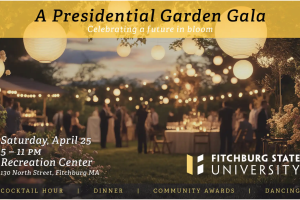
- Second annual Fitchburg State Presidential GalaThe Presidential Garden Gala: An Evening Where the Future Blooms – Fitchburg State University’s second annual black-tie fundraiser – will be held from 5-11 p.m. on Saturday, April 25 at the Recreation Center, 130 North Street. The Garden Gala program includes a cocktail reception and dinner, followed by the community awards ceremony and an evening of dancing. Honorees will include President Emeritus Robert V. Antonucci and Jeanne S. Antonucci; the Center for Italian Culture at Fitchburg State; and 2016 alumna Stephany Infante, now a member of the Lawrence City Council. Tickets and sponsorship information may be found at fitchburgstate.edu/gala2026. “The Presidential Garden Gala represents a critical investment in the success of our students and the vitality of our institution,” said Fitchburg State University President Donna Hodge. “As we honor the enduring legacy of the Antonuccis, the cultural impact of the Center for Italian Culture, and the leadership of alumna Stephany Infante, we are reminded that our community's support is what allows the next generation of leaders to thrive. This evening is a celebration of that shared commitment to Fitchburg State’s future.” At Fitchburg State, the saxifrage stands as a quiet emblem of strength—thriving in unlikely places, blooming with determination. It reflects the spirit of our students, who pursue their dreams with resilience, creativity, and courage. This year’s Presidential Garden Gala invites the community to be part of that story of growth. An Evening Where the Future Blooms is more than a celebration; it is a commitment to nurturing the next generation. Surrounded by a garden-inspired atmosphere, guests will experience the symbolism of the saxifrage woven throughout the evening—a reminder that even the smallest seed of support can spark extraordinary transformation. The university’s signature community awards are presented to honorees who have made a difference in the lives of Fitchburg State, its students, and the wider community. Community award recipients: The President’s Award for Service to the Institution will be presented to President Emeritus Robert V. Antonucci and his wife Jeanne S. Antonucci. “Bob’s presidency was defined by steady leadership, thoughtful decision-making, and a clear belief in the power and promise of public higher education,” said President Hodge. “He strengthened the foundation of the university and helped position Fitchburg State to endure change while remaining true to its mission. Many of the values that continue to guide this campus today reflect the tone and direction he set during his time here. “The warmth and generosity Jeanne extended to this community mattered deeply,” said Hodge. “She helped create a sense of welcome and connection that made Fitchburg State feel not just like a workplace or campus, but like a community. Her quiet leadership and genuine care for people enriched the university in ways that continue to be felt.” The President’s Award for Distinguished Service to Education will be presented to the Center for Italian Culture, which since 1999 has been one of the university’s most impactful community outreach programs. “The President’s Award for Distinguished Service to Education is reserved for individuals and organizations whose sustained commitment to learning, scholarship, and cultural exchange has strengthened both the university and the broader community,” said Hodge. “The Center for Italian Culture has done exactly that for more than two decades, enriching the intellectual and cultural life of our campus while helping preserve and celebrate an important part of the region’s heritage.” President’s Medallion for Emerging Impact will be presented to Stephany Infante. “This award celebrates individuals whose early accomplishments and forward-leaning leadership signal not just notable achievement, but meaningful promise,” said Hodge. “Stephany embodies that promise. From the moment she arrived at Fitchburg State, she embraced opportunities to serve, to step forward, and to find her voice in pursuit of the greater good. Stephany’s work in student government gave shape to her belief that leadership is first and foremost about listening and lifting up others.”
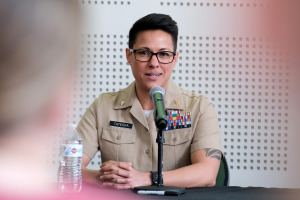
- Fitchburg State once again receives Military Friendly designationFitchburg State University announced that it has earned the 2026-2027 Military Friendly® School designation. Institutions earning the Military Friendly® School designation were evaluated using both public data sources and responses from a proprietary survey. The rankings measure institutions’ ability to meet thresholds for retention, graduation, job placement, repayment, persistence, and loan default rates for all students, and specifically for student veterans. Fitchburg State has been designated a Military Friendly® institution every year since 2015. In addition to the Gold ranking, Fitchburg State was also designated a Military Spouse Friendly School. “Earning the Gold ranking and the Military Spouse Friendly designation affirms the focused work we have undertaken over the past two years to strengthen how we serve military-connected students,” said Fitchburg State President Donna Hodge. “We have invested in dedicated leadership, expanded support structures, and deepened cross-campus collaboration to ensure that veterans, active-duty service members, National Guard members, spouses, and dependents experience not just access, but belonging and momentum.” Director of Military and Veteran Services Nolan Buck, who has the honor of assisting 99 student veterans enrolled at the university this semester, said he was proud of Fitchburg State’s continued recognition as a military-friendly institution. “Big energy and big pride as we once again earned military-friendly recognition, and we didn’t just maintain, we leveled up from Silver to Gold,” said Buck. “That kind of growth happens when passionate people come together with open minds and a real care-for-others mindset. Our mission is to serve all military-connected students, whether they are active duty, National Guard, veterans, spouses, dependents, or learning with us online or in person. I’m beyond grateful to everyone committed to supporting this community. This win reflects our heart, our teamwork, and our drive to keep raising the bar.” President Hodge said that as the veteran population is growing, that growth reflects both trust and outcomes. “These students bring leadership, discipline, global perspective, and a profound sense of service to our classrooms,” said Hodge. “They raise the standard for all of us. At Fitchburg State, we are committed to meeting them with clear pathways, flexible learning models, strong advising, and career preparation that translates their service into long-term opportunity. “This recognition matters because it signals results,” said Hodge. “But what matters more is the daily work behind it, ensuring that every military-connected student who chooses Fitchburg State finds a community ready to honor their service and invest in their future.” For more information about the university’s student veteran programs, visit fitchburgstate.edu/veterans. About Military Friendly ® Schools The Military Friendly® Schools list is created each year based on extensive research using public data sources from more than 8,800 schools nationwide, input from student veterans, and responses to the proprietary, data-driven Military Friendly® Schools survey from participating institutions. The survey questions, methodology, criteria and weighting were developed with the assistance of an independent research firm and an advisory council of educators and employers. The survey is administered for free and is open to all postsecondary schools that wish to participate. Criteria for consideration can be found at www.militaryfriendly.com About Fitchburg State University Fitchburg State University public institution located in Fitchburg, Massachusetts, dedicated to integrating high-quality professional programs with strong liberal arts and sciences studies. Founded in 1894, the university has more than 30 undergraduate programs and 22 master’s programs. About Viqtory Founded in 2001, VIQTORY is a service-disabled, veteran-owned small business (SDVOSB) that connects the military community to civilian employment, educational and entrepreneurial opportunities through its G.I. Jobs® and Military Friendly® brands. VIQTORY and its brands are not a part of or endorsed by the U.S. Dept of Defense or any federal government entity. Learn more about VIQTORY at www.viqtory.com
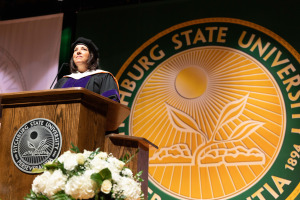
- Lt. Gov. Kim Driscoll to deliver Commencement Address On May 16Fitchburg State University President Donna Hodge is proud to announce that Massachusetts Lt. Gov. Kim Driscoll will deliver the keynote address at the university’s undergraduate commencement ceremony on Saturday, May 16, on the main quadrangle. Fitchburg State holds its 130th commencement exercises in May, with a graduate commencement ceremony at 8 a.m. followed by the undergraduate ceremony at 2 p.m. “On behalf of the entire campus community, I am thrilled to welcome Lt. Gov. Driscoll back to campus to deliver the commencement address on May 16,” President Hodge said. “With Gov. Maura Healey, Lt. Gov. Driscoll has been a staunch advocate for investments in public education. She knows the crucial role that institutions like Fitchburg State play in the lives of our students and the communities we serve. We are honored that she will address our graduating students as they prepare to continue their journeys in the Commonwealth of Massachusetts and beyond.” "I'm honored to be back at Fitchburg State as this year's commencement speaker,” Lt. Gov. Driscoll said. “As a proud graduate of Massachusetts’ public university system, I know how life-changing this kind of education can be. This year's Fitchburg State graduates will find incredible opportunities ahead of them as they enter their next chapter, and they'll use the skills they gained over the course of their time at Fitchburg State to make a positive impact on our communities. I'm excited to congratulate the Class of 2026 in person this May!" Lt. Gov. Driscoll last spoke on campus in April, delivering remarks at the investiture ceremony where President Hodge was formally installed as Fitchburg State’s 12th leader and the first woman to hold the post in the institution’s history. Fitchburg State will hold a separate ceremony at 8 a.m. Saturday, May 16, for the conferral of graduate degrees. This ceremony will also be held on the main quadrangle. Additional details on the ceremonies may be found at fitchburgstate.edu/commencement. Both ceremonies will stream live on FATV at fatv.org/fsu. About Lt. Gov. Kim Driscoll Driscoll is the 73rd Lieutenant Governor of the Commonwealth of Massachusetts, and with Gov. Healey represents the first all-women executive team to lead Massachusetts. Since taking office, Lt. Gov Driscoll has spearheaded several administration priorities and initiatives. Exemplified by her extensive and successful career in local government, Driscoll has served as a notable proponent for the economic development of Massachusetts cities and towns, and serves as a liaison for municipalities across the state. This commitment also includes leadership on tackling the state’s housing crisis and improving the state’s public education policy. Driscoll also chairs the Governor’s Council, the Governor’s Council to Address Sexual Assault, Domestic Violence, and Human Trafficking, the Seaport Economic Council, and co-chairs the STEM Advisory Council. About Fitchburg State Fitchburg State University is a public institution dedicated to integrating high-quality professional programs with strong liberal arts and sciences studies. Founded in 1894, the university now has more than 30 undergraduate programs and 22 master's degree programs, and 6,000 full and part-time students.
- Computer Science master’s program receives top ranking by TechGuideFitchburg State University’s online master’s degree in Computer Science, which allows students to obtain competitive skills and knowledge to succeed as computer scientists in the constantly developing high-technology marketplace, has been recognized and ranked No. 1 in TechGuide’s 2026 Best Online Master's in Computer Science Programs. “The master’s degree program in computer science provides graduate students with the opportunity to develop the competitive skills and knowledge needed to succeed as computer scientists in an ever-evolving high-technology marketplace,” said Fitchburg State University Professor Brady Chen of the Computer Science Department and the Graduate Program Chair. “We work closely with our alumni and industry partners to equip students with relevant expertise and exposure to cutting-edge technologies.” In 2025, Fitchburg State was ranked No. 17, and now it has climbed even higher, reflecting continued improvement and sustained academic strength. This improvement reflects the program’s continued excellence and impact in preparing students for success in computer science careers. Explore the full 2026 rankings. The rankings are based on official IPEDS data (Integrated Postsecondary Education Data System), reported annually by U.S. colleges and universities to the Department of Education. Using this data, TechGuide evaluates the metrics that matter most to students: admissions selectivity, class size and faculty support, financial aid availability, graduation outcomes, and total enrollment—highlighting what makes programs strong and how students thrive. About Fitchburg State Fitchburg State University is a public institution located in Fitchburg, Massachusetts, dedicated to integrating high-quality professional programs with strong liberal arts and sciences studies. Founded in 1894, the university now has more than 30 undergraduate programs and 22 master's degree programs, and 6,000 full and part-time students. About TechGuide TechGuide helps students, educators, and institutions make smarter decisions in Analytics and Computer Science. Reaching 30,000+ monthly visitors, We publish data-backed rankings, expert faculty insights, curated learning resources, and host 80+ podcast conversations with educators and tech professionals across the U.S.
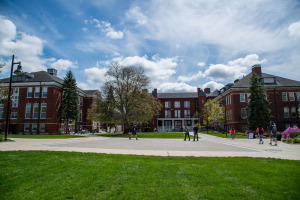
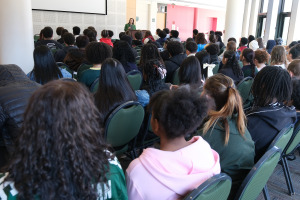
- ‘A great opportunity’ at Fitchburg StateThe transition from local student to Fitchburg State Falcon began on Tuesday. For 75 seniors from neighboring high schools, the Accepted Student Visit Day offered more than just a campus tour at Fitchburg State University—it was a chance to dive into the sights, sounds, and academic opportunities waiting for them right in their own backyard. “Your hard work, persistence, and potential have brought you to this moment,” said Fitchburg State President Donna Hodge, who addressed students from Fitchburg High, Goodrich Academy, Sizer School and St. Bernard’s in Hammond Hall’s Main Lounge. “You are here today because you have already proven that you possess the talent and drive to succeed at the collegiate level. It is my distinct honor to invite you to join a community that doesn't just recognize your potential—we are investing in it, and we are investing in you.” The Fitchburg Promise is a new direct admissions initiative for Fitchburg residents. Launched by President Hodge in September during her State of the University address, the program aims to broaden opportunities for students across the city. The agreement complements the university’s new direct admissions initiative, designed to remove barriers, simplify access, and guarantee admission to students in good standing at their high schools. Starting in the fall, any Fitchburg resident enrolled at one of the city’s high schools who maintains a 2.25 GPA will be guaranteed admission to Fitchburg State and may attend tuition and fee-free, so long as they remain in good standing. “It’s a great opportunity for people in Fitchburg and around to use this and utilize this,” said Fitchburg High senior Lillyan Marquez. “I think it’s a good idea.” Fitchburg State established these new agreements with Fitchburg High School -- including Goodrich Academy -- Montachusett Regional Vocational Technical School, St. Bernard’s High School and the Sizer School. “We are so pleased to partner with these students in their journey,” said Fitchburg State Vice President of Enrollment Management and Student Success Pam McCafferty. “A bachelor's degree opens the door to a brighter future by providing the skills that employers are seeking, as well as increased earning potential over a lifetime.” The Direct Admissions program, which extends to non-city residents at these schools, eliminates application fees and stress from the start. This pathway allows future students to begin exploring college life early by participating in Direct Admissions Discovery Days, where they can be part of fun on-campus events, meet professors, and actively discover their future educational path. The process is streamlined and simple, as students simply fill out an online opt-in form as early as their freshman year of high school. The program also delivers significant financial benefits, including $0 in-state tuition and fees for participants who reside in Fitchburg, and an annual $1,500 housing scholarship for those who decide to live on campus. “I’ve always been low income, so I’m going to take advantage of this because I would have never been able to go to college without that,” said Goodrich Academy senior Luka Paskell. Ben Lor and Molly Demeo, high school seniors at Fitchburg High School and Montachusett Regional Vocational Technical School, were officially the first two direct admission students who placed deposits and committed to becoming Falcons in the fall of 2026. Luis Laboy, a senior at Fitchburg High, said that the staff at Fitchburg State are extremely helpful. “They are really nice,” said Laboy, who is undecided on living on campus or commuting as a freshman and hopes to play collegiate baseball. “You ask them a question and they give you all the information you need. I feel like you don’t have to ask too many questions because they lay it all out for you and make it easy.” Fitchburg High senior Nilianys Santos Torres is committed to Fitchburg State and will enter the prestigious nursing program in the fall as a commuter student. “I’ve always wanted to work with something in medicine since I was little, and nursing is what really intrigues me,” said Santos Torres. “I want to help people.” Marquez will also commute, and wants to pursue a career in exercise science or physical therapy. “I thought Fitchburg State would be a good combination to achieve that,” said Marquez. Paskell will also live at home and major in criminal justice. “I always wanted to be a police officer, and I want to give back to the community,” said Paskell. “I feel like it’s a good opportunity with the Fitchburg Promise.” Fitchburg High senior Bianelis Pena is contemplating working after graduation, attending community college or enrolling at Fitchburg State. The low cost of Fitchburg State is appealing, however. “You don’t want to be in debt,” said Pena. “You don’t want to graduate and have to pay money for the rest of your life.” Learn more about Fitchburg State at fitchburgstate.edu.
Latest News
- Second annual Fitchburg State Presidential GalaThe Presidential Garden Gala: An Evening Where the Future Blooms – Fitchburg State University’s second annual black-tie fundraiser – will be held from 5-11 p.m. on Saturday, April 25 at the Recreation Center, 130 North Street. The Garden Gala program includes a cocktail reception and dinner, followed by the community awards ceremony and an evening of dancing. Honorees will include President Emeritus Robert V. Antonucci and Jeanne S. Antonucci; the Center for Italian Culture at Fitchburg State; and 2016 alumna Stephany Infante, now a member of the Lawrence City Council. Tickets and sponsorship information may be found at fitchburgstate.edu/gala2026. “The Presidential Garden Gala represents a critical investment in the success of our students and the vitality of our institution,” said Fitchburg State University President Donna Hodge. “As we honor the enduring legacy of the Antonuccis, the cultural impact of the Center for Italian Culture, and the leadership of alumna Stephany Infante, we are reminded that our community's support is what allows the next generation of leaders to thrive. This evening is a celebration of that shared commitment to Fitchburg State’s future.” At Fitchburg State, the saxifrage stands as a quiet emblem of strength—thriving in unlikely places, blooming with determination. It reflects the spirit of our students, who pursue their dreams with resilience, creativity, and courage. This year’s Presidential Garden Gala invites the community to be part of that story of growth. An Evening Where the Future Blooms is more than a celebration; it is a commitment to nurturing the next generation. Surrounded by a garden-inspired atmosphere, guests will experience the symbolism of the saxifrage woven throughout the evening—a reminder that even the smallest seed of support can spark extraordinary transformation. The university’s signature community awards are presented to honorees who have made a difference in the lives of Fitchburg State, its students, and the wider community. Community award recipients: The President’s Award for Service to the Institution will be presented to President Emeritus Robert V. Antonucci and his wife Jeanne S. Antonucci. “Bob’s presidency was defined by steady leadership, thoughtful decision-making, and a clear belief in the power and promise of public higher education,” said President Hodge. “He strengthened the foundation of the university and helped position Fitchburg State to endure change while remaining true to its mission. Many of the values that continue to guide this campus today reflect the tone and direction he set during his time here. “The warmth and generosity Jeanne extended to this community mattered deeply,” said Hodge. “She helped create a sense of welcome and connection that made Fitchburg State feel not just like a workplace or campus, but like a community. Her quiet leadership and genuine care for people enriched the university in ways that continue to be felt.” The President’s Award for Distinguished Service to Education will be presented to the Center for Italian Culture, which since 1999 has been one of the university’s most impactful community outreach programs. “The President’s Award for Distinguished Service to Education is reserved for individuals and organizations whose sustained commitment to learning, scholarship, and cultural exchange has strengthened both the university and the broader community,” said Hodge. “The Center for Italian Culture has done exactly that for more than two decades, enriching the intellectual and cultural life of our campus while helping preserve and celebrate an important part of the region’s heritage.” President’s Medallion for Emerging Impact will be presented to Stephany Infante. “This award celebrates individuals whose early accomplishments and forward-leaning leadership signal not just notable achievement, but meaningful promise,” said Hodge. “Stephany embodies that promise. From the moment she arrived at Fitchburg State, she embraced opportunities to serve, to step forward, and to find her voice in pursuit of the greater good. Stephany’s work in student government gave shape to her belief that leadership is first and foremost about listening and lifting up others.”
- Fitchburg State once again receives Military Friendly designationFitchburg State University announced that it has earned the 2026-2027 Military Friendly® School designation. Institutions earning the Military Friendly® School designation were evaluated using both public data sources and responses from a proprietary survey. The rankings measure institutions’ ability to meet thresholds for retention, graduation, job placement, repayment, persistence, and loan default rates for all students, and specifically for student veterans. Fitchburg State has been designated a Military Friendly® institution every year since 2015. In addition to the Gold ranking, Fitchburg State was also designated a Military Spouse Friendly School. “Earning the Gold ranking and the Military Spouse Friendly designation affirms the focused work we have undertaken over the past two years to strengthen how we serve military-connected students,” said Fitchburg State President Donna Hodge. “We have invested in dedicated leadership, expanded support structures, and deepened cross-campus collaboration to ensure that veterans, active-duty service members, National Guard members, spouses, and dependents experience not just access, but belonging and momentum.” Director of Military and Veteran Services Nolan Buck, who has the honor of assisting 99 student veterans enrolled at the university this semester, said he was proud of Fitchburg State’s continued recognition as a military-friendly institution. “Big energy and big pride as we once again earned military-friendly recognition, and we didn’t just maintain, we leveled up from Silver to Gold,” said Buck. “That kind of growth happens when passionate people come together with open minds and a real care-for-others mindset. Our mission is to serve all military-connected students, whether they are active duty, National Guard, veterans, spouses, dependents, or learning with us online or in person. I’m beyond grateful to everyone committed to supporting this community. This win reflects our heart, our teamwork, and our drive to keep raising the bar.” President Hodge said that as the veteran population is growing, that growth reflects both trust and outcomes. “These students bring leadership, discipline, global perspective, and a profound sense of service to our classrooms,” said Hodge. “They raise the standard for all of us. At Fitchburg State, we are committed to meeting them with clear pathways, flexible learning models, strong advising, and career preparation that translates their service into long-term opportunity. “This recognition matters because it signals results,” said Hodge. “But what matters more is the daily work behind it, ensuring that every military-connected student who chooses Fitchburg State finds a community ready to honor their service and invest in their future.” For more information about the university’s student veteran programs, visit fitchburgstate.edu/veterans. About Military Friendly ® Schools The Military Friendly® Schools list is created each year based on extensive research using public data sources from more than 8,800 schools nationwide, input from student veterans, and responses to the proprietary, data-driven Military Friendly® Schools survey from participating institutions. The survey questions, methodology, criteria and weighting were developed with the assistance of an independent research firm and an advisory council of educators and employers. The survey is administered for free and is open to all postsecondary schools that wish to participate. Criteria for consideration can be found at www.militaryfriendly.com About Fitchburg State University Fitchburg State University public institution located in Fitchburg, Massachusetts, dedicated to integrating high-quality professional programs with strong liberal arts and sciences studies. Founded in 1894, the university has more than 30 undergraduate programs and 22 master’s programs. About Viqtory Founded in 2001, VIQTORY is a service-disabled, veteran-owned small business (SDVOSB) that connects the military community to civilian employment, educational and entrepreneurial opportunities through its G.I. Jobs® and Military Friendly® brands. VIQTORY and its brands are not a part of or endorsed by the U.S. Dept of Defense or any federal government entity. Learn more about VIQTORY at www.viqtory.com
- Lt. Gov. Kim Driscoll to deliver Commencement Address On May 16Fitchburg State University President Donna Hodge is proud to announce that Massachusetts Lt. Gov. Kim Driscoll will deliver the keynote address at the university’s undergraduate commencement ceremony on Saturday, May 16, on the main quadrangle. Fitchburg State holds its 130th commencement exercises in May, with a graduate commencement ceremony at 8 a.m. followed by the undergraduate ceremony at 2 p.m. “On behalf of the entire campus community, I am thrilled to welcome Lt. Gov. Driscoll back to campus to deliver the commencement address on May 16,” President Hodge said. “With Gov. Maura Healey, Lt. Gov. Driscoll has been a staunch advocate for investments in public education. She knows the crucial role that institutions like Fitchburg State play in the lives of our students and the communities we serve. We are honored that she will address our graduating students as they prepare to continue their journeys in the Commonwealth of Massachusetts and beyond.” "I'm honored to be back at Fitchburg State as this year's commencement speaker,” Lt. Gov. Driscoll said. “As a proud graduate of Massachusetts’ public university system, I know how life-changing this kind of education can be. This year's Fitchburg State graduates will find incredible opportunities ahead of them as they enter their next chapter, and they'll use the skills they gained over the course of their time at Fitchburg State to make a positive impact on our communities. I'm excited to congratulate the Class of 2026 in person this May!" Lt. Gov. Driscoll last spoke on campus in April, delivering remarks at the investiture ceremony where President Hodge was formally installed as Fitchburg State’s 12th leader and the first woman to hold the post in the institution’s history. Fitchburg State will hold a separate ceremony at 8 a.m. Saturday, May 16, for the conferral of graduate degrees. This ceremony will also be held on the main quadrangle. Additional details on the ceremonies may be found at fitchburgstate.edu/commencement. Both ceremonies will stream live on FATV at fatv.org/fsu. About Lt. Gov. Kim Driscoll Driscoll is the 73rd Lieutenant Governor of the Commonwealth of Massachusetts, and with Gov. Healey represents the first all-women executive team to lead Massachusetts. Since taking office, Lt. Gov Driscoll has spearheaded several administration priorities and initiatives. Exemplified by her extensive and successful career in local government, Driscoll has served as a notable proponent for the economic development of Massachusetts cities and towns, and serves as a liaison for municipalities across the state. This commitment also includes leadership on tackling the state’s housing crisis and improving the state’s public education policy. Driscoll also chairs the Governor’s Council, the Governor’s Council to Address Sexual Assault, Domestic Violence, and Human Trafficking, the Seaport Economic Council, and co-chairs the STEM Advisory Council. About Fitchburg State Fitchburg State University is a public institution dedicated to integrating high-quality professional programs with strong liberal arts and sciences studies. Founded in 1894, the university now has more than 30 undergraduate programs and 22 master's degree programs, and 6,000 full and part-time students.
- Computer Science master’s program receives top ranking by TechGuideFitchburg State University’s online master’s degree in Computer Science, which allows students to obtain competitive skills and knowledge to succeed as computer scientists in the constantly developing high-technology marketplace, has been recognized and ranked No. 1 in TechGuide’s 2026 Best Online Master's in Computer Science Programs. “The master’s degree program in computer science provides graduate students with the opportunity to develop the competitive skills and knowledge needed to succeed as computer scientists in an ever-evolving high-technology marketplace,” said Fitchburg State University Professor Brady Chen of the Computer Science Department and the Graduate Program Chair. “We work closely with our alumni and industry partners to equip students with relevant expertise and exposure to cutting-edge technologies.” In 2025, Fitchburg State was ranked No. 17, and now it has climbed even higher, reflecting continued improvement and sustained academic strength. This improvement reflects the program’s continued excellence and impact in preparing students for success in computer science careers. Explore the full 2026 rankings. The rankings are based on official IPEDS data (Integrated Postsecondary Education Data System), reported annually by U.S. colleges and universities to the Department of Education. Using this data, TechGuide evaluates the metrics that matter most to students: admissions selectivity, class size and faculty support, financial aid availability, graduation outcomes, and total enrollment—highlighting what makes programs strong and how students thrive. About Fitchburg State Fitchburg State University is a public institution located in Fitchburg, Massachusetts, dedicated to integrating high-quality professional programs with strong liberal arts and sciences studies. Founded in 1894, the university now has more than 30 undergraduate programs and 22 master's degree programs, and 6,000 full and part-time students. About TechGuide TechGuide helps students, educators, and institutions make smarter decisions in Analytics and Computer Science. Reaching 30,000+ monthly visitors, We publish data-backed rankings, expert faculty insights, curated learning resources, and host 80+ podcast conversations with educators and tech professionals across the U.S.
- ‘A great opportunity’ at Fitchburg StateThe transition from local student to Fitchburg State Falcon began on Tuesday. For 75 seniors from neighboring high schools, the Accepted Student Visit Day offered more than just a campus tour at Fitchburg State University—it was a chance to dive into the sights, sounds, and academic opportunities waiting for them right in their own backyard. “Your hard work, persistence, and potential have brought you to this moment,” said Fitchburg State President Donna Hodge, who addressed students from Fitchburg High, Goodrich Academy, Sizer School and St. Bernard’s in Hammond Hall’s Main Lounge. “You are here today because you have already proven that you possess the talent and drive to succeed at the collegiate level. It is my distinct honor to invite you to join a community that doesn't just recognize your potential—we are investing in it, and we are investing in you.” The Fitchburg Promise is a new direct admissions initiative for Fitchburg residents. Launched by President Hodge in September during her State of the University address, the program aims to broaden opportunities for students across the city. The agreement complements the university’s new direct admissions initiative, designed to remove barriers, simplify access, and guarantee admission to students in good standing at their high schools. Starting in the fall, any Fitchburg resident enrolled at one of the city’s high schools who maintains a 2.25 GPA will be guaranteed admission to Fitchburg State and may attend tuition and fee-free, so long as they remain in good standing. “It’s a great opportunity for people in Fitchburg and around to use this and utilize this,” said Fitchburg High senior Lillyan Marquez. “I think it’s a good idea.” Fitchburg State established these new agreements with Fitchburg High School -- including Goodrich Academy -- Montachusett Regional Vocational Technical School, St. Bernard’s High School and the Sizer School. “We are so pleased to partner with these students in their journey,” said Fitchburg State Vice President of Enrollment Management and Student Success Pam McCafferty. “A bachelor's degree opens the door to a brighter future by providing the skills that employers are seeking, as well as increased earning potential over a lifetime.” The Direct Admissions program, which extends to non-city residents at these schools, eliminates application fees and stress from the start. This pathway allows future students to begin exploring college life early by participating in Direct Admissions Discovery Days, where they can be part of fun on-campus events, meet professors, and actively discover their future educational path. The process is streamlined and simple, as students simply fill out an online opt-in form as early as their freshman year of high school. The program also delivers significant financial benefits, including $0 in-state tuition and fees for participants who reside in Fitchburg, and an annual $1,500 housing scholarship for those who decide to live on campus. “I’ve always been low income, so I’m going to take advantage of this because I would have never been able to go to college without that,” said Goodrich Academy senior Luka Paskell. Ben Lor and Molly Demeo, high school seniors at Fitchburg High School and Montachusett Regional Vocational Technical School, were officially the first two direct admission students who placed deposits and committed to becoming Falcons in the fall of 2026. Luis Laboy, a senior at Fitchburg High, said that the staff at Fitchburg State are extremely helpful. “They are really nice,” said Laboy, who is undecided on living on campus or commuting as a freshman and hopes to play collegiate baseball. “You ask them a question and they give you all the information you need. I feel like you don’t have to ask too many questions because they lay it all out for you and make it easy.” Fitchburg High senior Nilianys Santos Torres is committed to Fitchburg State and will enter the prestigious nursing program in the fall as a commuter student. “I’ve always wanted to work with something in medicine since I was little, and nursing is what really intrigues me,” said Santos Torres. “I want to help people.” Marquez will also commute, and wants to pursue a career in exercise science or physical therapy. “I thought Fitchburg State would be a good combination to achieve that,” said Marquez. Paskell will also live at home and major in criminal justice. “I always wanted to be a police officer, and I want to give back to the community,” said Paskell. “I feel like it’s a good opportunity with the Fitchburg Promise.” Fitchburg High senior Bianelis Pena is contemplating working after graduation, attending community college or enrolling at Fitchburg State. The low cost of Fitchburg State is appealing, however. “You don’t want to be in debt,” said Pena. “You don’t want to graduate and have to pay money for the rest of your life.” Learn more about Fitchburg State at fitchburgstate.edu.
Latest Athletics News
- Softball falls short to Curry in 2026 Home Opening Doubleheader
- Fitchburg State’s Niles Earns Joe Concannon Award Finalist Honors Following Standout Rookie Campaign
- Falcons outlast Owls with late push for first conference win
- Women’s Lacrosse Clipped By Beacons In Non-Conference TiltNewton, MA –Â The Fitchburg State Women’s Lacrosse team dropped a tough 9-7 decision to the Beacons of UMass Boston this afternoon in non-conference action from Alumni Field.
- Women’s Lacrosse Edged By Lasers In Non-Conference ActionFitchburg, MA –Â The Fitchburg State Women’s Lacrosse team dropped an 11-8 decision to the Lasers of Lasell University this afternoon in non-conference action from Elliot Field.